
Professional carpet cleaning is a specialized service that uses industrial equipment and techniques to deep-clean carpets, removing dirt, stains, allergens, and bacteria that regular vacuuming cannot reach.
Methods include hot water extraction (steam cleaning), dry cleaning, and encapsulation, each suited to different carpet types and soil levels across New Zealand homes and businesses.
Table of Contents
- What are the different carpet cleaning methods used in New Zealand?
- How much does carpet cleaning cost in New Zealand?
- How often should carpets be professionally cleaned?
- What’s the difference between carpet cleaning and carpet shampooing?
- How long does it take for carpets to dry after professional cleaning?
- Can professional carpet cleaning remove all stains?
- Is professional carpet cleaning better than DIY cleaning?
- What should you do to prepare for professional carpet cleaning?
- How does carpet cleaning extend carpet life and improve air quality?
What are the different carpet cleaning methods used in New Zealand?
Professional carpet cleaners in New Zealand use several distinct methods, each with specific advantages for different situations, carpet types, and soil levels.
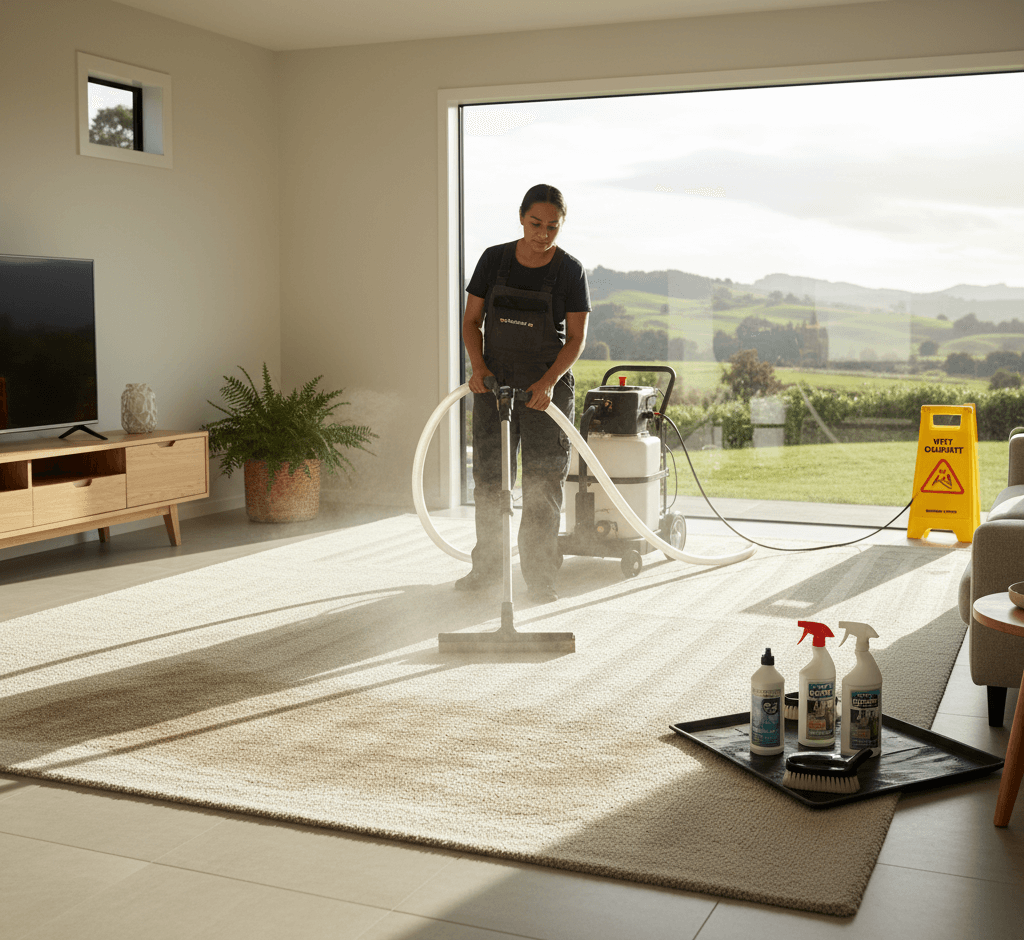
Hot water extraction (steam cleaning) is the most common and effective method for deep cleaning. Despite the name “steam cleaning,” this process uses hot water (not steam) mixed with cleaning solution, injected deep into carpet fibres under pressure, then immediately extracted along with loosened dirt, allergens, and contaminants.
This method works exceptionally well for:
- Heavily soiled carpets in high-traffic areas
- Homes with pets, children, or allergies
- Commercial spaces requiring deep sanitization
- Annual or semi-annual deep cleaning
- Removing embedded dirt that vacuuming misses
Hot water extraction removes up to 98% of common household allergens and kills dust mites, bacteria, and other microorganisms. The Carpet and Rug Institute recognizes this as the most thorough cleaning method available.
Dry cleaning (compound cleaning) uses minimal moisture, making it ideal for situations requiring quick carpet use. A specialized powder compound is spread across the carpet, worked into fibres with a machine, left to absorb dirt and oils, then vacuumed away.
Dry cleaning suits:
- Delicate or natural fibre carpets that shrink when wet
- Commercial spaces that cannot close for drying time
- Maintenance cleaning between deep cleans
- Wool and silk carpets
- High-traffic areas needing immediate use
This method allows carpets to be used within 30 minutes, making it popular for retail stores, offices, and hospitality venues across Auckland, Wellington, and Christchurch that cannot afford downtime.
Encapsulation cleaning represents newer technology using polymer-based solutions. The cleaning agent crystallizes around dirt particles, encapsulating them, then the dried crystals are vacuumed away. This method uses very little water and leaves no sticky residue.
Encapsulation works well for:
- Commercial carpet maintenance programs
- Low-pile synthetic carpets
- Interim cleaning between hot water extractions
- Spaces needing rapid drying (1-2 hours)
Bonnet cleaning uses a rotary machine with an absorbent pad soaked in cleaning solution. The spinning pad absorbs dirt from carpet surfaces. While quick and low-moisture, this method only cleans carpet surfaces rather than deep fibres, making it suitable only for light maintenance.
Shampooing is the traditional method using foam-based detergents scrubbed into carpets with rotary brushes. While less common now due to residue issues and longer drying times, some cleaners still use it for specific situations.
Professional carpet cleaning services assess your carpet type, soil level, and usage requirements to recommend the most appropriate method. Busy Bees teams across regions like Hamilton, Christchurch, and Wellington select methods based on New Zealand’s unique climate conditions and local building types.
How much does carpet cleaning cost in New Zealand?
Carpet cleaning costs vary based on several factors, but understanding typical price ranges helps homeowners and businesses budget appropriately.
| Pricing Factor | Impact on Cost |
| Property size | Larger areas cost more; typically priced per square metre |
| Carpet condition | Heavily soiled carpets require more time and product |
| Cleaning method | Hot water extraction typically costs more than dry cleaning |
| Stain treatment | Specialized stain removal incurs additional charges |
| Location | Urban centres may have slightly higher rates than regional areas |
| Furniture moving | Moving and replacing furniture adds to costs |
| Travel distance | Properties far from the cleaner’s base may include travel fees |
Residential carpet cleaning price ranges:
Per room pricing:
- Small bedroom (10-12 sqm): $35-$60 per room
- Medium bedroom/lounge (15-20 sqm): $50-$85 per room
- Large lounge/living area (25-30 sqm): $80-$120 per room
- Whole house packages: $200-$450 for 3-4 bedroom homes
Per square metre pricing:
- Standard cleaning: $3-$5 per square metre
- Heavy soil or pet odour treatment: $5-$8 per square metre
- Stain protection application: Additional $2-$3 per square metre
Commercial carpet cleaning:
- Office spaces: $2.50-$5 per square metre depending on access and soil level
- Retail spaces: $3-$6 per square metre for high-traffic areas
- Healthcare facilities: $4-$7 per square metre for sanitization requirements
- After-hours commercial cleaning: 10-20% premium for evening/weekend work
Additional services:
- Stain removal treatment: $15-$40 per stain depending on severity
- Pet odour treatment: $30-$80 per affected area
- Scotchgard or stain protection: $25-$60 per room
- Furniture moving: $20-$50 depending on quantity
- Carpet deodorizing: $15-$35 per room
Regional variations exist across New Zealand:
- Auckland, Wellington, and Christchurch rates typically sit at the higher end of ranges
- Regional centres like Rotorua, Tauranga, and Dunedin often have slightly lower rates
- Remote areas may include travel surcharges
Most professional carpet cleaners provide free quotes after assessing your specific carpets, stains, and requirements. Photos can help provide initial estimates, but on-site inspections yield the most accurate pricing.
Value considerations: While price matters, focusing solely on the cheapest quote often results in disappointing results. Professional equipment, quality cleaning solutions, trained technicians, and proper insurance cost more but deliver superior results that extend carpet life and improve indoor air quality. The cheapest service may use inferior products, undertrained staff, or inadequate equipment that leaves residue, damages fibres, or fails to remove deep soil.
How often should carpets be professionally cleaned?
Carpet cleaning frequency depends on usage patterns, household composition, carpet type, and environmental factors unique to New Zealand conditions.
Residential carpets require different schedules based on household characteristics:
Every 6 months for:
- Homes with children who play on floors regularly
- Households with pets, especially dogs or multiple animals
- High-traffic homes with frequent visitors
- Homes in dusty or rural areas
- Properties near busy roads where pollutants enter
- Households with asthma or allergy sufferers
New Zealand’s climate conditions in areas like Canterbury (dusty nor’westers), Waikato (agricultural particulates), or Auckland (urban pollution) contribute additional soil requiring more frequent professional cleaning.
Annually for:
- Average households without pets or young children
- Low-traffic homes with adults only
- Carpets in good condition with regular vacuuming maintenance
- Bedrooms and low-use areas
Annual cleaning maintains carpet warranties (most manufacturers require professional cleaning annually), removes accumulated allergens, and prevents permanent staining from gradual soil buildup.
Every 18-24 months for:
- Very low-traffic areas like guest rooms
- Adult-only households with no pets
- Properties with mostly hard flooring and minimal carpet
Even infrequently used carpets benefit from periodic professional cleaning to remove dust mites, prevent moth damage, and maintain appearance.
Commercial carpets need more aggressive schedules:
Quarterly (every 3 months) for:
- High-traffic retail stores and shopping centres
- Healthcare facilities and medical centres
- Schools and childcare centres
- Hospitality venues (hotels, restaurants)
- Gyms and fitness centres
Every 6 months for:
- Office buildings with moderate foot traffic
- Professional services firms
- Low-traffic retail areas
- Meeting rooms and conference facilities
Annually for:
- Small office areas with minimal use
- Executive suites and private offices
- Storage areas with carpet
Additional professional cleaning becomes necessary after:
- Flooding, leaks, or water damage (immediate cleaning prevents mold)
- Major spills or accidents
- Fire or smoke damage
- Illness outbreaks requiring sanitization
- Before moving in or out of rental properties
- Before selling a property (improves presentation)
Between professional cleanings, regular vacuuming (2-3 times weekly for high-traffic areas), immediate spot cleaning of spills, and annual hard floor care for non-carpeted areas maintain overall cleanliness. Professional cleaners like Busy Bees, with over 30 years of New Zealand experience, can assess your specific situation and recommend optimal cleaning schedules.
What’s the difference between carpet cleaning and carpet shampooing?
Many New Zealanders use “carpet cleaning” and “carpet shampooing” interchangeably, but these terms describe different processes with distinct results.
| Aspect | Modern Carpet Cleaning | Traditional Carpet Shampooing |
| Method | Hot water extraction, dry cleaning, or encapsulation | Foam-based detergent scrubbed with rotary brushes |
| Cleaning depth | Deep cleans to carpet backing | Surface and upper fibre cleaning only |
| Residue | Minimal to no residue left behind | Often leaves sticky detergent residue |
| Drying time | 6-12 hours (hot water) to 30 minutes (dry methods) | 24-48 hours due to heavy foam saturation |
| Re-soiling rate | Slower re-soiling, stays cleaner longer | Faster re-soiling as residue attracts dirt |
| Effectiveness | Removes deep soil, allergens, bacteria | Removes surface dirt and some stains |
| Equipment | Professional truck-mounted or portable extractors | Rotary brush machines with foam applicators |
Carpet shampooing was the standard method decades ago but has significant drawbacks. The foam-based detergents, while effective at lifting surface dirt, leave residue in carpet fibres. This sticky residue attracts new dirt, causing carpets to appear dirty again within days or weeks – the “rapid re-soiling” problem many homeowners experience after cheap carpet cleaning.
Additionally, shampooing saturates carpets heavily, requiring long drying times. In New Zealand’s humid regions like Auckland, Wellington, or Northland, this extended moisture exposure can encourage mold or mildew growth, creating health hazards rather than solving them.
Modern carpet cleaning methods, particularly hot water extraction, avoid these problems. The high-pressure water injection followed by immediate powerful extraction removes dirt AND cleaning solution, leaving minimal residue. This prevents rapid re-soiling and reduces drying time significantly.
Professional carpet cleaners have largely abandoned traditional shampooing in favour of superior methods. When companies advertise “carpet shampooing,” verify which method they actually use – many use the term colloquially but employ hot water extraction technology.
DIY carpet shampooers available for rent at supermarkets or hardware stores typically use outdated shampooing technology with the same residue problems. While cheaper upfront, they often disappoint homeowners who find carpets looking dirty again quickly. Professional equipment has far greater suction power, removing more water and residue than consumer machines can achieve.
For commercial cleaning environments in Christchurch, Auckland, or Wellington offices, professional hot water extraction or encapsulation methods maintain carpet appearance longer, reducing total cleaning frequency and costs over time.
How long does it take for carpets to dry after professional cleaning?
Drying time varies significantly based on cleaning method, carpet type, weather conditions, and ventilation – all factors particularly relevant in New Zealand’s variable climate.
Hot water extraction (steam cleaning) drying times:
- Typical range: 6-12 hours
- Well-ventilated rooms: 4-6 hours
- Humid conditions or poor ventilation: 12-24 hours
- Thick or wool carpets: Up to 24 hours
Canterbury’s dry nor’west winds accelerate drying, while Wellington’s humidity or Auckland’s winter dampness can extend times. Professional cleaners adjust water usage and extraction power based on local conditions.
Dry cleaning methods drying times:
- Standard: 30 minutes to 2 hours
- Immediate light foot traffic: Possible after 30 minutes
- Full furniture replacement: 1-2 hours
Businesses across Tauranga, Ashburton, or Timaru often choose dry cleaning for offices or retail spaces that cannot close for drying time.
Encapsulation cleaning drying times:
- Standard: 1-2 hours
- Light traffic: 30-60 minutes
- Full use: 2-3 hours
Factors affecting drying time:
Weather and humidity: New Zealand’s regional climate differences significantly impact drying. Summer cleaning in central Otago’s dry climate dries faster than winter cleaning in humid Northland. Professional cleaners schedule strategically based on weather forecasts.
Ventilation: Opening windows, using fans, and running heat pumps or dehumidifiers accelerate drying. Closed, unventilated rooms in older New Zealand homes (common in Wellington’s hillside suburbs or Auckland’s weatherboard houses) dry slower.
Carpet construction: Low-pile synthetic carpets dry faster than thick wool or high-pile carpets. Many New Zealand homes feature wool carpets that naturally retain more moisture, requiring longer drying times but offering superior durability.
Soil level: Heavily soiled carpets require more water and cleaning solution, extending drying time. Light maintenance cleans use less water and dry faster.
Professional equipment quality: Truck-mounted extraction units (common for professional services) have far more powerful vacuum suction than portable units, removing more water and significantly reducing drying time.
Tips to speed carpet drying:
- Schedule cleaning on warm, dry days when possible
- Open windows for cross-ventilation if weather permits
- Run ceiling fans, heat pumps, or dehumidifiers
- Avoid walking on carpets until dry (reduces re-soiling risk)
- Keep pets and children off cleaned carpets during drying
- Don’t replace furniture until carpets are completely dry (prevents rust stains or furniture damage)
Professional carpet cleaning services provide post-cleaning care instructions and expected drying times based on your specific carpets and conditions. Walking on damp (not soaking) carpets won’t damage them, but wearing clean socks or shoe covers prevents transferring dirt to freshly cleaned fibres.
Can professional carpet cleaning remove all stains?
Professional carpet cleaning removes most stains, but complete removal depends on the stain type, how long it’s been present, previous cleaning attempts, and carpet fibre type.
Stains professional cleaners successfully remove:
Food and beverage stains:
- Coffee, tea, soft drinks
- Wine (red wine removal success varies)
- Juice and cordial
- Chocolate and candy
- Cooking oils and grease
Organic stains:
- Pet urine, feces, and vomit (with enzymatic treatment)
- Blood (if treated promptly)
- Mud and dirt
- Grass stains
General household stains:
- Ink (ballpoint, marker – varying success)
- Makeup and cosmetics
- Dirt and tracked-in soil
- Water marks
Stains that may be difficult or impossible to remove:
Permanent or set stains:
- Old stains that have oxidized or set into fibres
- Bleach damage (bleach permanently removes colour)
- Dye transfer from clothing or rugs
- Permanent marker or industrial inks
- Nail polish (acetone often damages carpet fibres)
Chemical damage:
- Over-the-counter stain removers that set stains
- Inappropriate cleaning attempts that chemically alter fibres
- Acid or alkaline burns
- Hair dye or fabric dye
Fibre damage:
- Burn marks from cigarettes or heated objects
- Physical fibre destruction
- Colour loss from sun fading or bleach
- Melted synthetic fibres
Factors affecting stain removal success:
Time matters critically. Fresh spills cleaned within minutes usually remove completely. Stains left for days, weeks, or months penetrate deeper, oxidize, and bond with fibres, becoming permanent. Pet accidents in New Zealand homes, for example, should be addressed immediately – the longer urine sits, the more it damages carpet backing and creates permanent odours.
Previous cleaning attempts can help or hurt. Proper blotting and cold water treatment help. However, scrubbing, using hot water on protein stains (blood, pet accidents), or applying incorrect products can permanently set stains, making professional removal impossible.
Carpet fibre type affects stain resistance:
- Nylon carpets resist stains well and clean effectively
- Polyester shows stains more easily but cleans well
- Wool carpets stain easily but often clean successfully with proper treatment
- Olefin resists water-based stains but absorbs oil-based stains
Professional techniques increase success rates:
Professional carpet cleaners have specialized tools unavailable to homeowners:
- Enzymatic cleaners that break down organic stains
- Oxidizing agents for colour stains
- Acid rinses for alkaline stains
- Steam and agitation to loosen set-in soil
- Experience identifying stain types and appropriate treatments
Busy Bees carpet cleaning teams across Auckland, Wellington, Christchurch, and regional centres assess stains before cleaning, providing realistic expectations about removal success. Permanent stains may require carpet patching or replacement, which honest professionals discuss upfront rather than promising impossible results.
Prevention tips for New Zealand homes:
- Apply stain protection treatment after professional cleaning
- Clean spills immediately with cold water and blotting
- Avoid harsh chemicals or DIY stain removers
- Test any cleaning product on hidden carpet areas first
- Schedule professional cleaning before stains set permanently
- Consider darker carpets for high-traffic areas or pet homes
Is professional carpet cleaning better than DIY cleaning?
Professional carpet cleaning consistently outperforms DIY efforts, though the cost difference leads many New Zealanders to attempt cleaning themselves. Understanding the real differences helps make informed decisions.
| Aspect | Professional Cleaning | DIY Cleaning |
| Equipment power | Truck-mounted or commercial extractors (10-15x suction) | Rental machines (weak suction, poor water removal) |
| Water temperature | 80-90°C (optimizes cleaning chemistry) | Room temperature to warm (limited effectiveness) |
| Cleaning solutions | Professional-grade, pH-balanced, residue-free | Consumer products, often leave residue |
| Experience | Trained technicians recognize carpet types, stains | Learning curve, risk of damage |
| Results | Deep cleaning to backing, removes embedded soil | Surface cleaning only |
| Drying time | 4-12 hours with powerful extraction | 24-48+ hours with poor extraction |
| Re-soiling rate | Slower due to thorough residue removal | Faster due to residue attracting dirt |
| Cost efficiency | Higher upfront, longer-lasting results | Lower upfront, requires frequent re-cleaning |
| Time investment | None (professionals do everything) | 4-8 hours for whole-house cleaning |
| Insurance coverage | Professional liability covers damage | No coverage for DIY damage |
Equipment differences matter most. Rental machines available at New Zealand supermarkets or hardware stores cannot compare to professional truck-mounted systems. Professional extractors generate hot water under extreme pressure and extract with industrial vacuum power that removes 95%+ of water and cleaning solution. Rental machines leave carpets saturated, causing extended drying times, potential mold growth in humid climates, and rapid re-soiling from residue.
Busy Bees professional equipment used across Auckland, Wellington, and other regions extracts far more water than consumer machines can achieve, reducing drying time from 48+ hours to 6-12 hours.
Expertise prevents damage. Professional cleaners identify carpet construction and fibre types, selecting appropriate chemicals, temperatures, and techniques. DIY cleaners risk:
- Shrinking wool carpets with excessive water or heat
- Colour bleeding from inappropriate chemicals
- Backing separation from over-wetting
- Mold growth from inadequate drying
- Setting stains permanently with wrong treatments
Cost comparison over time:
DIY approach:
- Rental machine: $50-$80 per day
- Cleaning solution: $30-$50
- Additional treatments: $20-$40
- Time investment: 6-8 hours labour
- Frequency needed: Every 4-6 months due to rapid re-soiling
- Annual cost: $200-$340 plus significant time investment
Professional approach:
- Whole house cleaning: $200-$450
- Superior, lasting results
- No time investment
- Frequency needed: Annually for most homes
- Annual cost: $200-$450 with minimal time investment
Professional cleaning’s superior results mean less frequent cleaning needed, often equalizing or beating DIY costs while delivering dramatically better outcomes.
When DIY makes sense:
Small, isolated stains between professional cleanings Quick touch-ups for immediate spills Small area rugs that fit in washing machines Rental properties where landlords won’t pay for professional cleaning (though professional cleaning at lease-end recovers deposits)
When professional cleaning is essential:
Annual deep cleaning for warranty maintenance Moving in/out of properties After pets, flooding, or major spills Before selling homes (improves sale value) Commercial properties requiring proper sanitization Heavily soiled or stained carpets Large homes where DIY would take days
For most New Zealand households and all commercial properties, professional carpet cleaning provides superior value, results, and convenience despite higher upfront costs.
What should you do to prepare for professional carpet cleaning?
Proper preparation ensures carpet cleaners can work efficiently, protects your belongings, and maximizes cleaning results. Most preparation takes 30-60 minutes and significantly improves outcomes.
Before the scheduled appointment:
Vacuum thoroughly the day before or morning of cleaning. While professional cleaners pre-vacuum, removing surface dirt beforehand allows them to focus on deep cleaning rather than basic surface soil removal. This is particularly important in New Zealand homes with pets or children where surface debris accumulates quickly.
Remove small items and breakables from carpeted areas:
- Ornaments, photo frames, and decorative items from shelves and surfaces
- Toys, shoes, and clutter from floors
- Waste bins and small furniture pieces if easy to move
- Delicate or valuable items near cleaning areas
- Electronics, remote controls, and small devices
Identify problem areas and stains for the cleaners. Point out:
- Specific stains requiring special attention
- High-traffic areas needing focus
- Pet accident locations (even if not visible)
- Areas of concern or previous cleaning failures
- Bleach damage or permanent staining you’re aware of
Decide on furniture moving. Most professional cleaners charge extra for furniture moving. Standard practice includes:
- Cleaners move light furniture (dining chairs, small tables, ottomans)
- Homeowners should move or empty large furniture beforehand if possible
- Beds: remove linens, cleaners typically clean around beds unless moving arranged
- Entertainment centres: unplug and move electronics before arrival
- Heavy wardrobes, pianos, and antiques: typically cleaned around unless special arrangements made
Secure pets in a safe area away from cleaning zones. Professional equipment noise can frighten pets, and pets can interfere with hoses, cords, or wet carpets. Many Busy Bees clients in Christchurch, Hamilton, and other areas secure pets in backyards, garages, or single rooms during cleaning.
Arrange parking access for professional vans. Truck-mounted systems need proximity to your home:
- Clear driveway space near the property
- Inform cleaners about parking restrictions or permit requirements
- Consider street parking availability in urban areas like Wellington’s steep suburbs or Auckland’s narrow streets
- Notify cleaners about access challenges (steep driveways, long distances from street)
Communicate special requirements:
- Allergy concerns requiring fragrance-free or specific products
- Chemical sensitivities
- Stain protection application preferences
- Specific areas to avoid or focus on
- Any access codes, building security, or special entry requirements
For commercial properties, preparation includes:
- Notify staff about cleaning schedules and access restrictions
- Remove confidential documents from desks and surfaces
- Secure valuable equipment or sensitive areas
- Coordinate with building security for after-hours access
- Clear walkways and ensure cleaner access to all carpeted areas
On cleaning day:
Ensure someone is home for the initial walk-through and final inspection, or arrange key access if you cannot be present. Most professional cleaners spend 2-4 hours for average homes, longer for large properties or heavily soiled carpets.
Post-cleaning care:
- Keep traffic off carpets until completely dry (6-12 hours)
- Use fans or open windows to accelerate drying
- Replace furniture only after carpets dry completely
- Use clean socks or shoe covers if you must walk on damp carpets
- Follow any specific care instructions from cleaners
Proper preparation allows professional cleaners to deliver optimal results efficiently. Busy Bees teams provide specific preparation instructions when booking, tailored to your property type and cleaning scope.
How does carpet cleaning extend carpet life and improve air quality?
Professional carpet cleaning provides significant long-term benefits beyond immediate appearance improvement, offering measurable returns on investment for both homes and businesses.
Carpet life extension:
Carpets represent substantial investments, particularly quality wool carpets common in New Zealand homes. A good carpet costs $50-$150+ per square metre installed. Regular professional cleaning extends carpet lifespan from the typical 5-7 years to 10-15 years or longer.
How cleaning preserves carpets:
Embedded dirt and grit act like sandpaper on carpet fibres. Every footstep grinds these abrasive particles against fibres, causing premature wear, matting, and fibre breakdown. High-traffic areas show this damage first – hallways, living rooms, and office entrances develop worn pathways where fibres appear crushed or thin.
Professional cleaning removes this embedded grit before it causes permanent damage. Regular cleaning maintains carpet resilience, allowing fibres to spring back and retain their appearance. This is particularly important for commercial properties in Auckland, Wellington, or Christchurch where heavy foot traffic accelerates wear without proper maintenance.
Stain prevention through regular cleaning matters significantly. Small spills and gradual soiling, if left untreated, oxidize and become permanent. Once stains set permanently, carpets look worn and dated even if fibres remain intact. Professional cleaning prevents this oxidation process, maintaining carpet appearance throughout its lifespan.
Manufacturer warranty protection requires annual professional cleaning for most carpet warranties. Without documented professional cleaning, warranties become void, leaving homeowners responsible for premature replacement costs. Keeping receipts from professional cleaners protects this valuable warranty coverage.
Air quality improvements:
Carpets act as massive air filters, trapping dust, allergens, pet dander, pollen, and other airborne particles. While this filtration improves air quality temporarily, saturated carpets eventually release these trapped contaminants back into breathing air, degrading indoor air quality.
Allergen removal through professional cleaning significantly benefits New Zealand households, particularly those with asthma or allergies. The Asthma and Respiratory Foundation NZ notes that indoor air quality often poses greater health risks than outdoor air, particularly in well-sealed modern homes where allergens concentrate.
Professional hot water extraction removes:
- Dust mites and their waste products (major asthma triggers)
- Pollen trapped in carpet fibres during spring and summer
- Pet dander from dogs and cats
- Mold spores in humid climates like Auckland or Northland
- Bacteria and viruses that survive on carpet surfaces
- Volatile organic compounds (VOCs) from household products
Studies show that professional carpet cleaning removes up to 98% of common household allergens, substantially improving indoor air quality for sensitive individuals.
Odour elimination improves living and working environments. Carpets absorb and retain odours from pets, cooking, smoking, and general household activities. These odours become embedded in fibres and backing, creating musty or unpleasant indoor environments. Professional cleaning with proper deodorizing treatments removes odour sources rather than merely masking them with fragrances.
Mold and bacteria control matters particularly in New Zealand’s humid regions. Carpets in bathrooms, basements, or homes near coastlines can harbour mold and mildew if moisture isn’t properly managed. Professional cleaning with sanitizing agents kills mold spores, bacteria, and other microorganisms, creating healthier indoor environments.
Workplace benefits from clean carpets include:
- Reduced employee sick leave (cleaner air means fewer respiratory issues)
- Improved professional appearance for client-facing businesses
- Better focus and productivity in clean environments
- Extended carpet life reducing replacement capital expenses
- Compliance with workplace health and safety requirements
For commercial cleaning clients across Waikato, Canterbury, and Otago regions, Busy Bees provides regular carpet maintenance programs that protect these significant investments while maintaining healthy workplaces.
Cost-benefit analysis:
Consider a medium-sized office with 200 square metres of quality commercial carpet:
- Initial carpet investment: $10,000-$20,000 installed
- Professional cleaning cost: $500-$1,000 twice yearly
- Without regular cleaning: Replacement needed in 5-7 years
- With regular cleaning: Replacement needed in 12-15 years
The annual cleaning investment of $1,000-$2,000 delays replacement by 5-8 years, saving $10,000-$20,000 in capital costs – a 500-1000% return on cleaning investment.
Additionally, improved air quality reduces sick leave costs. If regular cleaning prevents just 2-3 sick days annually across a 20-person office, the productivity savings alone justify cleaning costs.
Conclusion: Key Takeaways on Carpet Cleaning in New Zealand
Professional carpet cleaning provides essential maintenance for homes and businesses across New Zealand:
- Multiple cleaning methods exist, with hot water extraction (steam cleaning) being most effective for deep cleaning, while dry methods suit quick-turnaround commercial applications
- Costs range from $3-$8 per square metre depending on method, soil level, and property type, with whole-house residential cleaning typically $200-$450
- Cleaning frequency should be every 6-12 months for residential properties and quarterly to annually for commercial spaces, depending on traffic and usage
- Drying times vary from 30 minutes (dry cleaning) to 6-12 hours (hot water extraction), affected by New Zealand’s regional climate conditions
- Professional cleaning outperforms DIY significantly due to superior equipment, expertise, and results that last longer despite higher upfront costs
- Most stains are removable when treated promptly by professionals, though permanent damage from bleach, burns, or set-in stains may be irreversible
- Proper preparation including vacuuming, removing small items, and securing pets ensures efficient, thorough cleaning
- Long-term benefits include extended carpet life (10-15 years vs. 5-7 years), improved air quality, allergen removal, and manufacturer warranty protection
Busy Bees has provided professional carpet cleaning across New Zealand for over 30 years, serving homes and businesses from Auckland to Invercargill. Our teams understand New Zealand’s unique climate challenges, building types, and local carpet care needs.
Whether you need annual residential carpet maintenance, commercial carpet programs, or specialized stain removal, professional carpet cleaning protects your investment, improves your indoor environment, and maintains the appearance your home or business deserves.
Ready to restore your carpets? Contact Busy Bees for a free carpet cleaning quote, or explore our locations to connect with your nearest professional carpet cleaning team.