Commercial cleaning services are professional cleaning solutions designed for business environments, including offices, retail spaces, schools, and healthcare facilities.
These services typically include daily or scheduled cleaning, deep cleaning, carpet care, window cleaning, and specialized sanitization to maintain hygienic, professional workspaces across New Zealand.
Table of Contents
- What types of businesses need commercial cleaning services?
- What’s included in standard commercial cleaning services?
- How much do commercial cleaning services cost in New Zealand?
- What’s the difference between commercial and residential cleaning?
- How often should businesses schedule commercial cleaning?
- What should you look for when choosing a commercial cleaning company?
- Do commercial cleaners work after hours?
- What cleaning standards apply to commercial spaces in New Zealand?
- How can commercial cleaning improve workplace productivity?
What types of businesses need commercial cleaning services?
Nearly every business in New Zealand benefits from professional commercial cleaning services. The most common sectors include:
- Office environments such as corporate headquarters, coworking spaces, and professional services firms require regular cleaning to maintain professional appearances and healthy work environments. Auckland’s CBD, Wellington’s business district, and Christchurch’s rebuilt commercial areas all host thousands of offices relying on commercial cleaners.
- Retail spaces including shopping centres, standalone stores, and showrooms need daily cleaning to create welcoming customer experiences. High foot traffic means these spaces accumulate dirt, germs, and debris quickly.
- Healthcare facilities like medical centres, dental practices, and aged care facilities demand specialized cleaning protocols. These environments require sanitization that meets health and safety standards set by the Ministry of Health.
- Educational institutions from early learning centres to universities need cleaning that accommodates children’s health needs and high-traffic student areas. Schools across regions like Waikato and Canterbury rely on commercial cleaners during term breaks and daily maintenance.
- Hospitality venues including restaurants, cafes, hotels, and event spaces require deep cleaning that meets food safety standards. Tourism hubs in Rotorua, Queenstown, and Auckland depend on immaculate commercial spaces.
- Industrial and warehouse facilities need specialized cleaning for large spaces, equipment areas, and compliance with WorkSafe New Zealand requirements.
What’s included in standard commercial cleaning services?
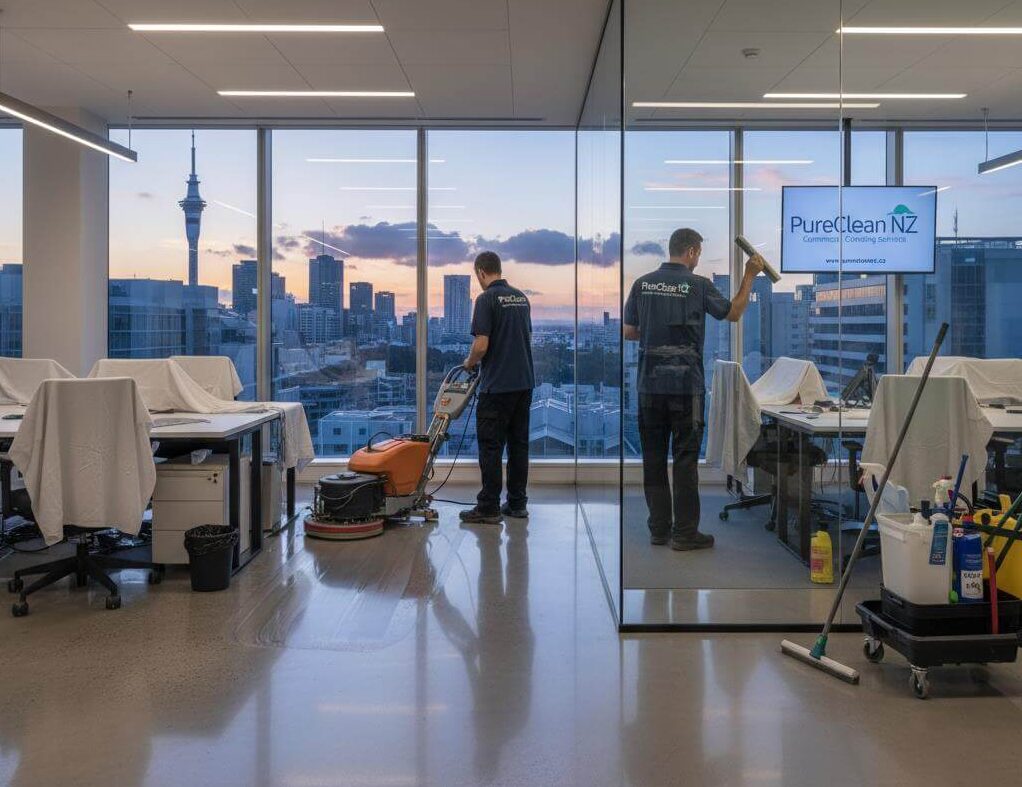
Commercial cleaning services in New Zealand typically cover comprehensive maintenance tailored to your business needs:
Daily cleaning tasks form the foundation of most contracts:
- Vacuuming and mopping all floor surfaces
- Emptying rubbish bins and replacing liners
- Cleaning and sanitizing bathrooms (toilets, sinks, mirrors)
- Wiping down desks, tables, and common surfaces
- Cleaning kitchen and breakroom areas
- Spot-cleaning windows and glass doors
Weekly deep cleaning addresses areas needing less frequent attention:
- Detailed dusting of shelves, window sills, and fixtures
- Cleaning interior windows thoroughly
- Sanitizing light switches, door handles, and high-touch areas
- Floor care including scrubbing and polishing
- Cleaning behind and under furniture
Monthly or quarterly services include:
- Carpet cleaning and extraction
- Hard floor stripping and sealing
- High-level dusting (ceiling fans, air vents, light fixtures)
- External window cleaning
- Blind and curtain cleaning
Specialized services available on request:
- Meth testing and decontamination
- Post-construction cleaning
- End-of-lease commercial cleaning
- Event cleaning and setup
- Sanitization and disinfection programs
Most commercial cleaning companies customize packages based on your industry, square meterage, and frequency needs rather than offering one-size-fits-all solutions.
How much do commercial cleaning services cost in New Zealand?
Commercial cleaning costs vary significantly based on several factors, but understanding typical price ranges helps businesses budget appropriately.
| Pricing Factor | Impact on Cost |
| Facility size | Larger spaces cost more; typically priced per square metre |
| Cleaning frequency | Daily service costs less per visit than weekly or one-off cleans |
| Service scope | Basic cleaning costs less than deep cleaning or specialized services |
| Location | Urban centres (Auckland, Wellington) may have higher rates than regional areas |
| After-hours work | Evening or weekend cleaning may incur premium rates |
| Industry requirements | Healthcare or food service may need specialized protocols |
General price ranges for New Zealand commercial cleaning:
Small offices (100-200 square metres): $150-$400 per clean for weekly service, or $80-$150 per clean for daily contracts.
Medium offices (200-500 square metres): $300-$800 per clean for weekly service, with daily contracts offering better per-clean rates.
Large commercial spaces (500+ square metres): Often quoted at $0.50-$1.50 per square metre depending on cleaning intensity and frequency.
Specialized services command different rates:
- Carpet cleaning: $3-$8 per square metre
- Window cleaning: $5-$15 per window depending on height and access
- Deep cleaning: 50-100% premium over standard cleaning rates
- Meth testing and cleaning: Varies significantly based on contamination levels
Most reputable cleaning companies provide free on-site quotes rather than phone estimates, as they need to assess your specific space, requirements, and challenges. Busy Bees operates across Auckland, Hamilton, Wellington, Christchurch, and other regions, offering customized quotes based on local market rates and your facility’s needs.
What’s the difference between commercial and residential cleaning?
While both services aim to create clean spaces, commercial and residential cleaning differ substantially in approach, equipment, and expertise.
| Aspect | Commercial Cleaning | Residential Cleaning |
| Scale | Large spaces, multiple rooms, high traffic | Single homes, smaller areas |
| Equipment | Industrial-grade machines, commercial products | Household equipment, lighter products |
| Scheduling | Often after-hours, weekends, minimal disruption | During business hours, flexible timing |
| Insurance | Higher liability coverage, public liability essential | Standard domestic insurance |
| Standards | Industry-specific regulations, health codes | Personal preferences, household standards |
| Contracts | Long-term contracts, regular service agreements | One-off or casual arrangements common |
| Team size | Multiple cleaners working simultaneously | Often solo cleaners or small teams |
Commercial cleaning teams receive specialized training for business environments. They understand how to work around sensitive equipment, maintain security protocols, and follow industry-specific sanitization requirements. A Busy Bees commercial team in Wellington, for example, knows how to clean government offices with appropriate security clearances and confidentiality.
Residential cleaners like those offering home cleaning services focus on personal spaces, working around family schedules and individual preferences. They use different products, gentler techniques, and adjust to household needs.
Many professional cleaning companies, including Busy Bees with over 30 years of New Zealand experience, offer both services but assign specialized teams to each sector. This ensures businesses receive commercial-grade results rather than residential-style cleaning unsuited to workplace demands.
How often should businesses schedule commercial cleaning?
Cleaning frequency depends on your industry, foot traffic, staff size, and specific business needs. Here’s what works for different New Zealand business types:
Daily cleaning suits:
- High-traffic retail stores and shopping centres
- Busy office buildings with 50+ employees
- Healthcare facilities and medical centres
- Hospitality venues (restaurants, hotels)
- Gyms and fitness centres
- Schools and childcare centres
Daily service maintains consistently high standards, prevents buildup of dirt and germs, and creates the best impression for customers and staff.
2-3 times weekly works for:
- Medium-sized offices (20-50 people)
- Professional services firms with moderate client visits
- Showrooms with regular but not constant traffic
- Small retail operations
This frequency balances cost-effectiveness with cleanliness standards. High-touch areas may need daily attention even if full cleaning occurs less frequently.
Weekly cleaning is appropriate for:
- Small offices (under 20 people)
- Low-traffic professional spaces
- Warehouse offices and administrative areas
- Storage facilities with minimal public access
Weekly service works when staff maintain basic tidiness between professional cleans.
Fortnightly or monthly service suits:
- Very small offices or home offices
- Spaces needing periodic deep cleaning only
- Facilities with minimal daily use
Seasonal or quarterly deep cleaning complements regular schedules for all businesses. This includes carpet extraction, hard floor maintenance, high-level dusting, and comprehensive sanitization.
According to Building Service Contractors of New Zealand, businesses that maintain regular cleaning schedules report 20-30% fewer sick days among staff, highlighting cleaning’s role in workplace health beyond mere appearance.
What should you look for when choosing a commercial cleaning company?
Selecting the right commercial cleaning partner significantly impacts your business operations, workplace health, and budget. Consider these essential factors:
Experience and track record matter substantially. Companies with decades of New Zealand experience, like Busy Bees (operating since 1993), understand local business needs, regional considerations, and industry-specific requirements that newer operators might miss. Ask for references from similar businesses in your area.
Insurance and compliance are non-negotiable. Verify that any commercial cleaner carries:
- Public liability insurance (minimum $2 million coverage recommended)
- Employer liability insurance for their staff
- ACC coverage for all employees
- Compliance with Health and Safety at Work Act requirements
Request copies of insurance certificates and WorkSafe documentation before signing contracts.
Local presence provides accountability and rapid response. National franchises with local teams, such as Busy Bees locations across Christchurch, Hamilton, Tauranga, Wellington, and other centres, combine professional standards with local accessibility. Your cleaner should understand regional factors like Canterbury’s earthquake-recovery building codes or Wellington’s wind-exposed high-rises.
Staff vetting and training protect your business. Commercial cleaners access your premises, often outside business hours. Ask about:
- Police vetting procedures for all staff
- Training programs and certifications
- Staff retention rates (high turnover signals problems)
- Supervision and quality control processes
Environmental practices increasingly matter to New Zealand businesses. The Sustainable Business Network reports that 67% of Kiwi companies now prioritize eco-friendly suppliers. Ask about:
- Use of environmentally certified cleaning products
- Water conservation practices
- Waste reduction and recycling programs
- Compliance with Environmental Protection Authority guidelines
Clear contracts and communication prevent misunderstandings. Professional commercial cleaners provide:
- Detailed scope of work documents
- Transparent pricing with no hidden fees
- Clear complaint resolution procedures
- Regular quality checks and feedback systems
- Flexibility for schedule changes or special requests
Industry-specific expertise matters for specialized sectors. Healthcare facilities need cleaners trained in infection control. Food service venues require knowledge of food safety standards. Schools need cleaners experienced with child-safe products and MOE requirements.
Don’t choose solely on price. The cheapest quote often means cut corners, inadequate insurance, or undertrained staff. Focus on value: reliability, quality, and professionalism that protect your business reputation.
Do commercial cleaners work after hours?
Yes, most commercial cleaning services in New Zealand operate outside standard business hours to minimize disruption. This flexible scheduling benefits both cleaners and businesses.
Evening cleaning (typically 6pm-midnight) is the most common schedule for:
- Office buildings where staff leave by 5-6pm
- Retail stores that close in the evening
- Professional services firms
- Small to medium businesses
Evening shifts allow cleaners to work thoroughly without navigating around employees, moving equipment freely, and accessing all areas without disturbing meetings or work activities.
Night cleaning (midnight-6am) suits:
- Large corporate offices
- Buildings with 24-hour security requirements
- Facilities needing complete overnight turnaround
- Multi-tenant buildings with coordinated access
Some Auckland CBD and Wellington businesses prefer overnight cleaning to ensure spaces are pristine before early-arriving staff.
Weekend cleaning works for:
- Businesses open Monday-Friday only
- Spaces needing undisturbed deep cleaning time
- Schools and educational facilities during term
- Retail spaces closed Sundays
Daytime cleaning occurs in:
- Healthcare facilities requiring continuous cleaning
- Retail environments needing real-time maintenance
- Large facilities with dedicated cleaning staff
- High-traffic public spaces
Flexible scheduling accommodates:
- Shift-work businesses operating non-standard hours
- Hospitality venues with varying closing times
- Industrial facilities with production schedules
- Emergency or urgent cleaning needs
Security considerations for after-hours cleaning include:
- Key holding and alarm code management
- Sign-in/sign-out procedures
- Building security coordination
- Staff identification and vetting
- Lockup procedures and responsibility
Professional commercial cleaners work with your security systems and building management to ensure safe, accountable after-hours access. Busy Bees teams across New Zealand coordinate with clients to establish secure, reliable scheduling that suits each facility’s unique operational requirements.
What cleaning standards apply to commercial spaces in New Zealand?
New Zealand commercial cleaning operates within several regulatory frameworks ensuring workplace health, safety, and environmental responsibility.
Health and Safety at Work Act 2015 forms the foundation of workplace cleaning standards. Under this legislation, businesses must provide safe, healthy work environments. This includes:
- Regular cleaning to prevent slip, trip, and fall hazards
- Sanitization of high-touch surfaces to reduce illness transmission
- Proper waste management and disposal
- Clean amenities (bathrooms, kitchens, break rooms)
- Adequate ventilation and air quality maintenance
WorkSafe New Zealand enforces these requirements and can penalize businesses failing to maintain adequate cleanliness standards.
Industry-specific standards apply to certain sectors:
Healthcare facilities must meet Ministry of Health guidelines for infection prevention and control. This includes specific sanitization protocols, hospital-grade disinfectants, and documented cleaning schedules.
Food service businesses follow Food Act 2014 requirements, which mandate clean premises, proper waste disposal, and sanitary food preparation areas. Local councils enforce these through regular inspections.
Educational facilities operate under Ministry of Education guidelines requiring clean, safe environments for children. This includes non-toxic cleaning products in areas accessible to students.
Building compliance standards from the Building Act 2004 require maintained buildings, including regular cleaning of fire safety equipment, emergency exits, and building systems.
Environmental standards from the Environmental Protection Authority regulate cleaning product use, chemical disposal, and waste management. Commercial cleaners must handle hazardous substances according to Hazardous Substances and New Organisms Act 1996.
Employment standards also affect commercial cleaning. The Employment Relations Act 2000 ensures cleaning staff receive fair wages, proper training, and safe working conditions. Ethical businesses verify their cleaners meet these standards rather than exploiting vulnerable workers.
Professional commercial cleaning companies stay current with regulatory changes and train staff accordingly. They maintain documentation proving compliance, carry appropriate insurance, and follow best practices recognized by industry associations like Building Service Contractors of New Zealand.
How can commercial cleaning improve workplace productivity?
Research consistently demonstrates that workplace cleanliness directly impacts employee performance, health, and satisfaction. Here’s how professional commercial cleaning benefits New Zealand businesses:
Reduced sick leave represents the most measurable benefit. The Ministry of Health notes that proper workplace sanitization, especially of high-touch surfaces like door handles, light switches, and shared equipment, significantly reduces illness transmission. Businesses with daily professional cleaning report 20-30% fewer sick days compared to those with sporadic cleaning.
During New Zealand’s winter months (June-August), when cold and flu viruses circulate widely, consistent commercial cleaning becomes even more critical. Professional cleaners use hospital-grade disinfectants and proper sanitization techniques that DIY cleaning often misses.
Improved air quality affects cognitive function. Dust, allergens, and indoor air pollutants accumulate in carpets, upholstery, and ventilation systems. Regular carpet cleaning and proper ventilation maintenance remove these irritants. Studies show that improved air quality can increase productivity by up to 11%.
Enhanced focus and morale result from clean, organized workspaces. Cluttered, dirty environments create mental fatigue and stress. A Princeton University study found that physical clutter competes for attention, reducing working memory and increasing cognitive load. Professional cleaning eliminates these distractions.
Better first impressions matter for client-facing businesses. Clean offices signal professionalism, attention to detail, and respect for clients. This psychological impact influences client confidence and business success, particularly in competitive sectors like legal services, financial advice, and real estate.
Equipment longevity improves with regular cleaning. Dust and grime damage computers, printers, and other office equipment. Professional cleaning extends equipment life, reducing replacement costs and minimizing downtime from equipment failures.
Workplace satisfaction increases when employees feel their employer cares about their environment. The Sustainable Business Network found that 78% of New Zealand workers consider workplace cleanliness important to job satisfaction. This affects retention and recruitment in tight labour markets.
Compliance and safety improve with professional cleaning. Properly maintained floors prevent slip and trip accidents. Clean amenities meet health and safety requirements. This reduces ACC claims, WorkSafe interventions, and legal liability.
The return on investment for professional commercial cleaning typically exceeds costs through these productivity gains, reduced sick leave, and improved employee retention. Smart New Zealand businesses view commercial cleaning as productivity investment rather than mere expense.
Conclusion: Key Takeaways on Commercial Cleaning Services
Commercial cleaning services provide essential support for New Zealand businesses across all sectors:
- Professional commercial cleaning encompasses regular maintenance, deep cleaning, and specialized services tailored to business environments from offices to healthcare facilities
- Costs vary based on facility size, frequency, and requirements, with prices ranging from $0.50-$1.50 per square metre for standard service, though quotes should be customized
- Frequency depends on your business type, with high-traffic environments needing daily service while small offices may require only weekly cleaning
- After-hours scheduling minimizes business disruption, with most commercial cleaners working evenings, nights, or weekends
- Regulatory compliance matters, including Health and Safety at Work Act requirements, industry-specific standards, and environmental regulations
- Productivity benefits include reduced sick leave (20-30% decrease), improved air quality, better employee morale, and extended equipment life
- Choosing the right provider requires verifying insurance, experience, local presence, staff vetting, and industry-specific expertise
For over 30 years, Busy Bees has provided commercial cleaning services across New Zealand’s major centres, from Auckland’s CBD to Christchurch’s business district. Our national network delivers consistent standards while our local teams understand regional needs and building requirements.
Whether you need daily office cleaning, periodic deep cleaning, or specialized services like carpet care or meth testing, professional commercial cleaning protects your business investment, supports employee health, and maintains the professional environment your customers expect.
Ready to improve your workplace environment? Contact Busy Bees for a customized commercial cleaning quote, or explore our locations to connect with your nearest team.